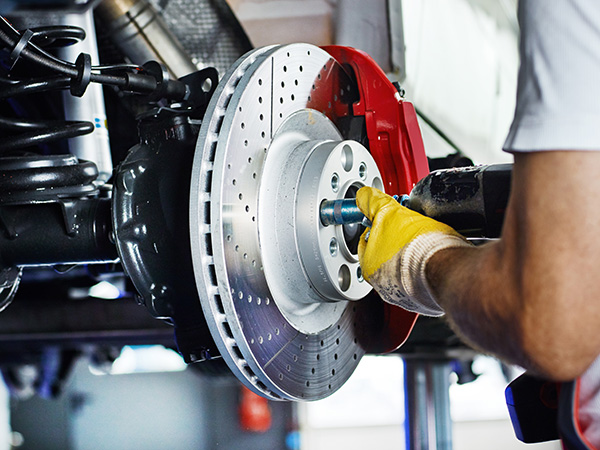
Brake Inspection & Repair
A functioning brake system is central to safe vehicle operation. Over time, components wear in ways that aren't always obvious until a problem becomes significant. Our brake inspection covers the entire system — from the pedal feel down to the discs and beyond.
We start with a visual assessment during which we check disc pad thickness, disc condition, caliper operation, and brake hose integrity. Where fluid condition is involved, we test its moisture content using a refractometer to determine whether a change is due.
A squealing or grinding noise when braking, a brake pedal that feels softer or needs more travel than usual, vibration through the pedal, or a vehicle that pulls to one side under braking are all worth having inspected. These don't automatically mean major work is needed, but an assessment will clarify the situation.
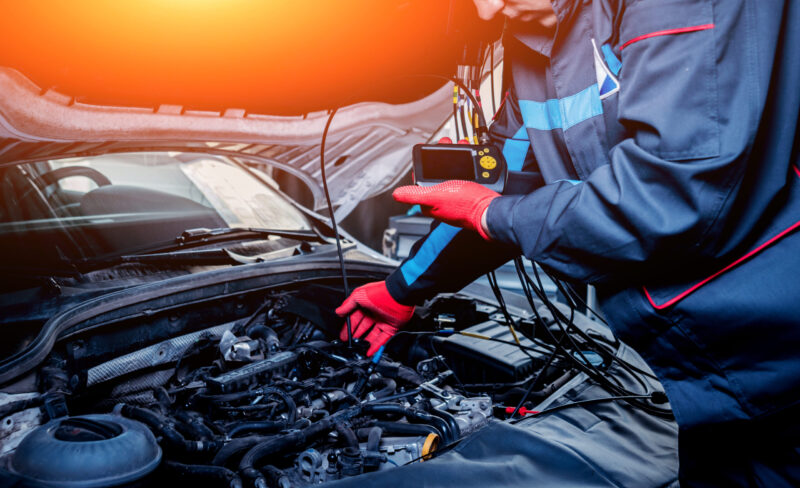
Engine Diagnostics
Modern vehicles generate fault codes whenever the engine management system detects a value outside its expected parameters. These codes are a starting point, not a conclusion — interpreting them correctly requires knowledge of the specific vehicle and its operating conditions.
We use diagnostic equipment that reads codes across multiple vehicle systems, not just the engine ECU. This gives a fuller picture when multiple warning lights are active or when a fault is intermittent.
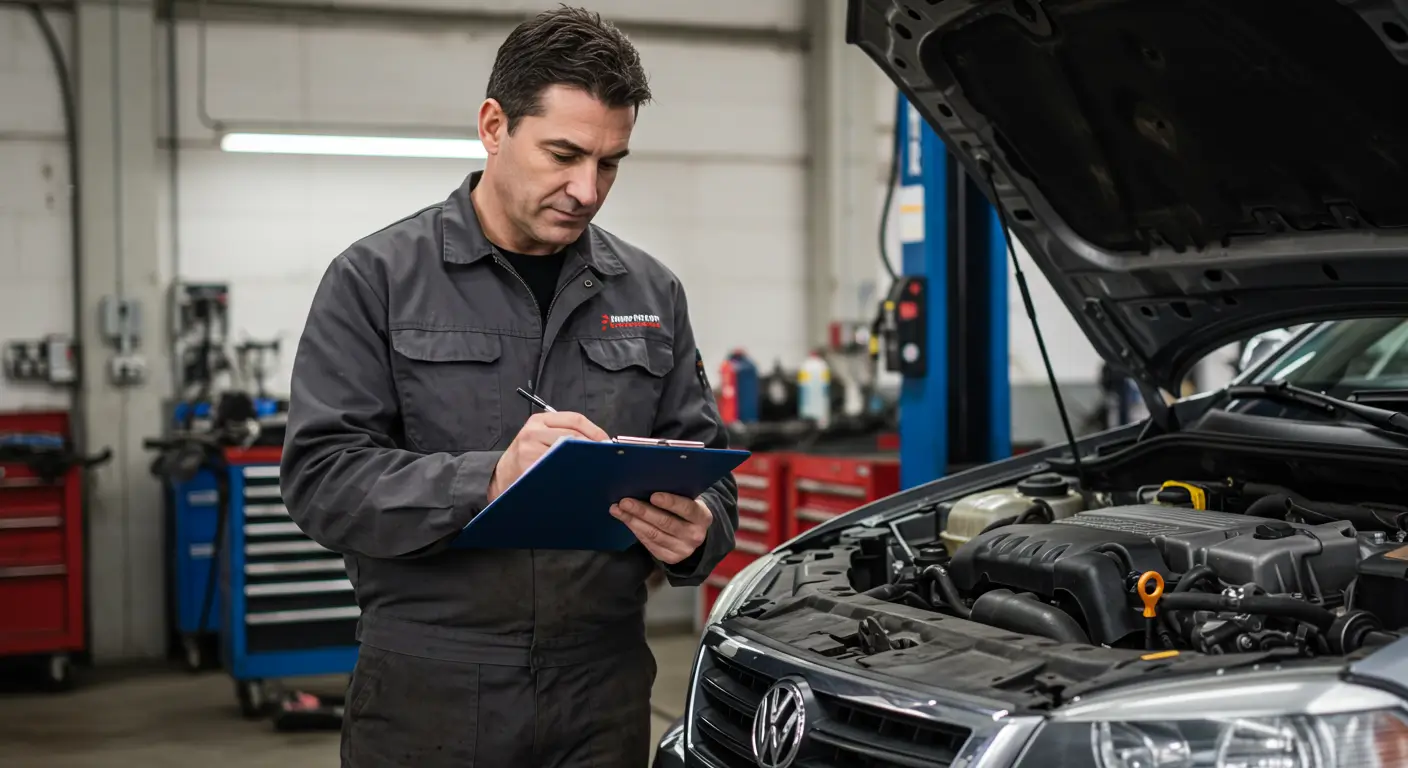
MOT Preparation Check
An MOT test checks that your vehicle meets minimum road safety and environmental standards. The preparation check we offer is not the MOT itself — it's an internal review of the main items the official test examines so that you know what condition your vehicle is in beforehand.
If we identify items likely to result in a failure, we can either address them prior to the test or make you aware so you can decide how to proceed. This is not a guarantee of an MOT pass.
Suspension & Steering
The suspension and steering systems affect how your vehicle handles, how tyres wear, and how stable the vehicle is at speed. Worn components often develop gradually, which means changes in handling can go unnoticed until the wear becomes significant.
Our inspection covers the key components on both the front and rear axles. We use a vehicle lift to access the underside and check items under load conditions where appropriate.
Clutch Repair
A clutch is a wear component — it will eventually need attention in any manual transmission vehicle. The rate of wear depends on driving style, vehicle weight, and how the clutch is used in stop-start conditions.
Our assessment covers both the mechanical and hydraulic elements of the clutch system. We check pedal feel, engagement point, and look for signs of slipping or difficulty engaging gears.
Battery & Electrical Systems
Modern vehicles rely on stable electrical supply for functions ranging from the engine management system to comfort features. Battery deterioration is one of the more common causes of starting problems and unexpected warning lights.
We test the battery's actual charge capacity rather than just its voltage, which gives a more accurate picture of its condition. We also test the charging system to confirm the alternator is maintaining the correct output.
Oil & Filter Service
Engine oil lubricates the moving parts within the engine and helps manage operating temperatures. Over time and mileage, oil degrades and its ability to protect the engine reduces. A scheduled oil change at the manufacturer's recommended interval is one of the most straightforward ways to maintain engine condition.
We use the oil viscosity and specification recommended for your vehicle. This matters more on newer engines where tolerances are tighter and where the wrong specification can affect performance or economy.
Cooling System Service
The cooling system manages engine temperature by circulating coolant between the engine, radiator, and heater circuit. A failing component in this system can lead to engine overheating, which can cause significant internal damage if not addressed.
Coolant degrades over time and its protective properties — including freeze protection and rust inhibition — reduce. Most manufacturers recommend coolant renewal every two to four years.