Vehicles operate across a fairly demanding range of conditions throughout the year in the UK. The shift from summer to autumn, and from winter into spring, places different demands on almost every system — tyres, batteries, cooling, braking, visibility, and lighting all respond to temperature and conditions in ways that make seasonal checks worthwhile.
For drivers in Argyll and the west of Scotland, the demands are arguably more pronounced than further south. Winters are wetter, colder, and longer. Road surfaces can deteriorate quickly. Salt and standing water are consistent winter features. This article covers the main seasonal checks and explains the reasoning behind them.
Preparing for Autumn and Winter
The approach of colder weather is the most important period for vehicle preparation. Several systems are directly affected by lower temperatures, and identifying any weaknesses before they become problems in genuinely difficult conditions is sensible.
Battery Condition
Cold weather is harder on batteries for two reasons. First, low temperatures reduce the chemical efficiency of the battery, meaning it produces less starting current than it would in warmer conditions. Second, cold weather means more electrical loads — heated rear windows, heated seats, blower motors, and wipers all draw current, sometimes while the alternator output is still low during warm-up.
A battery that's borderline in summer may struggle noticeably in winter. Battery testing before the cold season involves measuring both the cold cranking amps the battery can deliver and its overall capacity — a reading of terminal voltage alone doesn't tell you much about real-world performance. Batteries typically last between three and six years; if yours is approaching that range and showing signs of slow cranking, testing it before winter makes sense.
Tyres
Tyre condition is relevant throughout the year, but it becomes more critical in wet, cold conditions. Rubber compounds stiffen in low temperatures, reducing grip. Tread depth affects how effectively tyres channel water away from the contact patch — the UK legal minimum is 1.6mm across the central three-quarters of the tyre, but performance in wet conditions reduces noticeably below 3mm.
Before winter, it's worth checking tread depth on all four tyres, looking for uneven wear patterns that might suggest alignment or suspension issues, and checking tyre pressures. Pressures typically drop by around 1 PSI for every 10°C fall in temperature, so pressures that were correct in summer may be marginally low in cold weather.
All-season tyres are worth considering for drivers in areas with regular cold, wet winters. True winter tyres offer better performance in near-freezing and sub-zero conditions due to their compound and tread pattern, though the decision involves weighing up cost, storage, and actual local conditions.
Coolant Freeze Protection
Engine coolant contains antifreeze that protects against freezing in cold conditions. Over time, the concentration of antifreeze can reduce — through topping up with water that's diluted the mix, or through gradual coolant loss. A refractometer test can check the freeze protection level of the coolant in a few seconds. For Scotland, freeze protection to at least -20°C is sensible.
Lighting
Winter brings shorter daylight hours, more rain, fog, and the increased likelihood of driving in reduced visibility conditions. Before the clocks go back, it's worth checking that all lights are functioning correctly — headlamps on dipped and main beam, front and rear foglights, indicators, brake lights, and reverse lights. Number plate lights are often overlooked and are a common minor MOT failure item.
Wipers and Screenwash
Wiper blades deteriorate through UV exposure and use, and blades that left streaks or missed areas in summer will perform poorly in the rain. Replacement is straightforward and inexpensive. Screenwash concentration should be checked — water alone will freeze in the reservoir and jets in cold conditions, and summer-formula screenwash concentrations may not provide adequate freeze protection.
Spring Checks After Winter
The period after winter is a practical time to assess how the vehicle came through the cold and wet months.
Underbody Inspection
Road salt is used extensively on UK roads during cold spells and causes accelerated corrosion on exposed metal components. The underside of a vehicle — including brake lines, exhaust components, suspension parts, and structural sections — is subject to this salt exposure throughout winter. A post-winter check of the underside, particularly on older vehicles, can identify corrosion that's developed or progressed during the season.
Brake hoses and hydraulic lines on older vehicles are particularly worth monitoring. Salt exposure accelerates the deterioration of rubber hoses and can cause surface corrosion on metal brake lines that, over time, weakens them.
Tyre Inspection
Winter driving can be harder on tyres. Potholes are more prevalent after cold weather, and impacts that cause internal tyre damage or wheel damage aren't always apparent immediately. After winter, a visual inspection of all four tyres for bulges, cuts, or cracking in the sidewall is worthwhile. Wheel damage that's affected alignment should be checked if the car is tracking differently or if tyre wear seems uneven.
Fluid Top-Up and Assessment
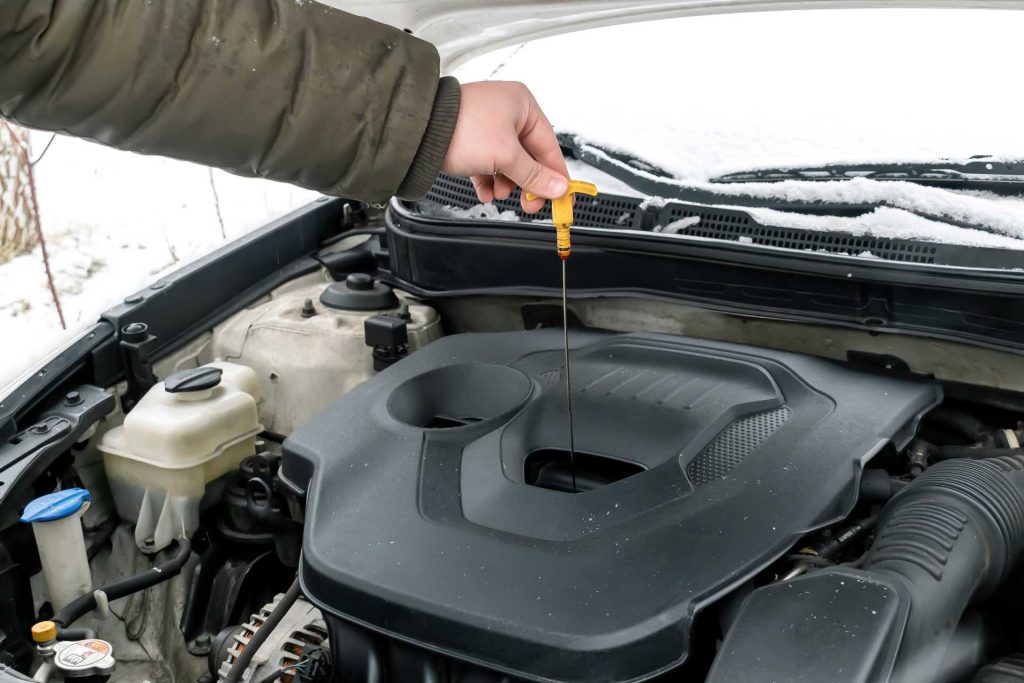
Engine oil, coolant, brake fluid, and power steering fluid levels should be checked after any period of sustained use. If oil level has dropped noticeably over the winter, this warrants investigation — modest oil consumption in older engines is not unusual, but a significant drop suggests either an external leak or internal consumption that should be assessed.
Summer Preparation
Summer in the UK rarely requires the same level of preparation as winter, but there are a few considerations worth addressing as temperatures rise.
Cooling System Performance
Hot weather and sustained motorway driving can push the cooling system harder than average urban use. If the temperature gauge has been running higher than usual, or if the coolant level has been dropping, a cooling system inspection before a long summer journey is a sensible step. A pressure test can identify small leaks that might not be producing obvious external evidence.
Air Conditioning
Air conditioning systems that haven't been used heavily during winter may develop reduced performance by mid-summer due to natural refrigerant permeation through hoses over time. A regas service can restore cooling performance. It's also worth running the air conditioning periodically throughout the year — extended periods of disuse can allow seals to dry out, which accelerates refrigerant loss over time.
Tyre Pressures in Hot Weather
Tyre pressure rises slightly in hot weather as the air inside the tyre expands. This isn't generally a concern for standard road tyres under normal conditions, but it's worth checking pressures against the manufacturer's recommended figure rather than simply inflating based on how the tyres look.
The Value of Consistent Vehicle Assessment
Seasonal checks don't need to be complex or time-consuming. For most vehicles, a visual inspection of tyres, lights, and fluid levels combined with attention to how the car is performing takes only a few minutes. For anything beyond that — battery testing, cooling system pressure checks, brake and suspension assessments — a workshop visit once or twice a year, timed around seasonal transitions, provides a practical framework for maintaining vehicle condition.
In Argyll, where distances to specialist facilities can be greater than in urban areas, having a reliable vehicle matters more than average. Regular checks and prompt attention to minor issues is a more practical approach than dealing with unexpected failures in difficult weather or remote locations.
Our team can carry out a full vehicle inspection ahead of winter or following the season. Get in touch to arrange a booking.
Request a Booking