Brake systems wear through normal use, and the rate at which components degrade depends on a range of factors — vehicle weight, driving style, road type, and historical maintenance. Unlike many vehicle faults, brake wear tends to be gradual rather than sudden, which means it's possible to miss the early stages if you're not paying attention to how the car feels and sounds.
This article explains how the main components of a disc brake system work, what happens as they wear, which signs are worth noting, and what a professional inspection covers.
How Disc Brakes Work
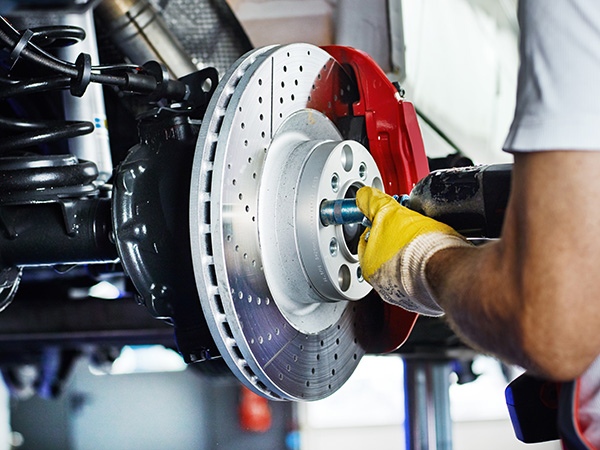
Most modern vehicles use disc brakes on all four wheels, or at minimum on the front axle. A brake disc — also called a rotor — rotates with the wheel. A caliper mounted alongside the disc houses hydraulic pistons and brake pads. When you press the brake pedal, hydraulic pressure forces the caliper pistons outward, pressing the pads against both faces of the spinning disc. The friction this creates converts kinetic energy into heat and slows the wheel's rotation.
The brake pads and discs are the primary wear components in this system. Pads consist of a friction material bonded to a metal backing plate. As they press against the disc over time, the friction material thins. Discs also wear, though usually more slowly than pads, and they can develop surface irregularities such as scoring or uneven thickness depending on use and conditions.
Supporting the mechanical system is a hydraulic circuit. Brake fluid transmits force from your pedal to the caliper pistons through rubber hoses and metal lines. If the fluid degrades or a hose weakens, the hydraulic response changes — usually felt as a softer or less consistent pedal.
What Determines Pad Wear Rate
Brake pad wear is not uniform across all vehicles or all driving patterns. Several factors affect how quickly the friction material thins:
- Driving environment. Stop-start urban use applies the brakes far more frequently than steady motorway driving. A vehicle used mostly in town will typically see faster pad wear than one covering long rural distances.
- Vehicle weight. Heavier vehicles — including large SUVs and loaded vans — require more braking force to decelerate, placing greater demands on the friction material with each stop.
- Pad specification. Different brake pads are formulated for different applications. Performance-oriented compounds can offer stronger bite but wear faster; some economy-focused pads last longer but may have a softer initial feel.
- Caliper condition. A caliper that isn't releasing fully after braking means the pad remains in light contact with the disc even when you're not pressing the pedal. This significantly accelerates wear and can cause uneven wear patterns across the pad surface.
Disc Wear and Surface Condition
Discs wear more slowly than pads and are replaced less frequently, but they do require attention at intervals. Two common issues are worth understanding:
Scoring. When brake pads wear down to the metal backing plate without being replaced, metal-on-metal contact scores the disc surface. Scored discs often cause noise and can reduce braking consistency. Depending on depth, the disc may need machining or replacement.
Thickness variation. Through sustained use, discs can develop slight unevenness across their surface. This often produces a pulsating sensation through the brake pedal — particularly when braking from higher speeds on a motorway. This phenomenon is sometimes described as judder and is usually traceable to disc condition.
Surface corrosion deserves a separate mention. Discs rust quickly on vehicles that aren't driven regularly, or after heavy rain when the car has been sitting unused. In most cases this clears with normal braking within a few stops. Persistent rust that doesn't clear, or rust that has pitted the disc surface, is worth having assessed.
"When we find scoring on a disc during inspection, the key question is depth. Light surface marks are normal wear. Deep grooves that developed because a pad wore through to the backing plate are more significant — they usually mean replacing the disc alongside the pads."
Brake Fluid and the Hydraulic Circuit
Brake fluid is hygroscopic — it absorbs moisture from the atmosphere over time. As water content increases, the fluid's boiling point drops. Under normal everyday driving this doesn't present an immediate problem, but under sustained heavy braking — descending a long hill, for example — the fluid can heat considerably. If moisture absorption has reduced the boiling point significantly, vapour bubbles can form in the brake lines. Vapour is compressible in a way fluid is not, which can make the pedal feel spongy and the braking response less predictable.
Most manufacturers recommend brake fluid replacement every one to two years, though this varies by vehicle specification. A refractometer test can measure water content in the fluid without draining it — a straightforward check that adds only a few minutes to an inspection.
Brake hoses are the other hydraulic component worth monitoring. Made from reinforced rubber, they can develop surface cracks or internal delamination over time, particularly on older vehicles. Cracked hoses are visible during a visual inspection; internal deterioration may only become apparent through a pressure test or by replacement based on age.
Signs Worth Paying Attention To
None of the following are a definitive diagnosis — they're indicators that a check is sensible:
- High-pitched squealing when braking. Most brake pads include a wear indicator — a small metal tab that contacts the disc when friction material has thinned to a threshold level. The resulting squeal is intentional. Some squealing can also occur on cold mornings from light surface rust, which usually clears within a few stops.
- Grinding noise during or after braking. Metal-on-metal grinding suggests the pad has worn through its friction material, or that a foreign object has become lodged near the disc or caliper. This warrants prompt attention.
- Changed pedal feel. A softer pedal that requires more travel before the brakes engage, or one that sinks further toward the floor than previously, can indicate low fluid, air in the hydraulic circuit, or a worn master cylinder.
- Pulling to one side under braking. Consistent pulling left or right when braking often indicates uneven pad wear, a caliper functioning differently on one side, or a pressure imbalance in the system.
- Vibration through the pedal. Pulsation during braking typically relates to disc condition — thickness variation, surface irregularity, or scoring can all cause this.
- Handbrake needing significantly more travel. If the handbrake needs to be pulled much further than previously to hold the vehicle on a slope, this can indicate rear pad wear, cable stretch, or rear caliper issues depending on the vehicle type.
What a Workshop Brake Inspection Covers
A thorough brake inspection involves more than a brief visual look. At Zenvyxa, a standard brake inspection covers:
- Measurement of pad friction material thickness on all four wheels against minimum serviceable limits
- Visual and tactile assessment of disc surface condition, and measurement of disc thickness against manufacturer minimum specifications
- Caliper inspection for correct operation and for signs of piston or slider seizure
- Brake hose and line inspection for cracking, perishing, or evidence of fluid seepage
- Hydraulic fluid moisture content test using a refractometer
- Handbrake cable or electronic parking brake check
Findings are shared with the customer in written form. Any recommended work is discussed and quoted before anything proceeds — we don't assume authorisation to replace parts based on an inspection report alone.
How Often Should Brakes Be Checked?
There's no single interval that applies to every vehicle, because wear rate varies significantly. A practical approach is to have the system assessed as part of an annual service or alongside other scheduled work. For vehicles covering higher annual mileages, or those used predominantly in urban stop-start conditions, more frequent checks are reasonable.
If any of the signs described above appear, booking a specific brake inspection sooner rather than later is sensible. Catching wear early usually means more options and simpler repairs — and it avoids the possibility of secondary damage from worn pads accelerating disc deterioration.
If you'd like your brakes checked at our Dunoon workshop, use the contact form or call us directly.
Request a Booking